
India, a nation of diverse cultures and traditions, offers a treasure trove of temples, palaces, forts and heritage buildings to its travelers. From the Taj Mahal and Qutab Minar to Charminar and Old Goa Churches, these historical monuments of India stand as enduring symbols of the country’s architectural marvels and cultural heritage.
Explore India’s ancient temples, breathtaking heritage sites, and iconic landmarks — each one a chapter in the story of one of the world’s oldest civilisations. Here are the most famous historical monuments of India, celebrated for their cultural, architectural, and historical importance:
Quick Reference
| # | Monument | Location | Built | UNESCO |
| 1 | Taj Mahal | Agra, UP | 1631–1653 | Yes (1983) |
| 2 | Churches of Old Goa | Old Goa, Goa | 16th–17th c | Yes (1986) |
| 3 | Charminar | Hyderabad, Telangana | 1591 | No |
| 4 | Qutub Minar | New Delhi | 1193–1368 | Yes (1993) |
| 5 | Sanchi Stupa | Sanchi, MP | 3rd c BCE | Yes (1989) |
| 6 | Cellular Jail | Port Blair, A&N | 1896–1906 | No |
| 7 | Hawa Mahal | Jaipur, Rajasthan | 1799 | No |
| 8 | Chhatrapati Shivaji Terminus | Mumbai, Maharashtra | 1878–1888 | Yes (2004) |
| 9 | Victoria Memorial Hall | Kolkata, West Bengal | 1906–1921 | No |
| 10 | Gateway of India | Mumbai, Maharashtra | 1913–1924 | No |
1. Taj Mahal – Agra
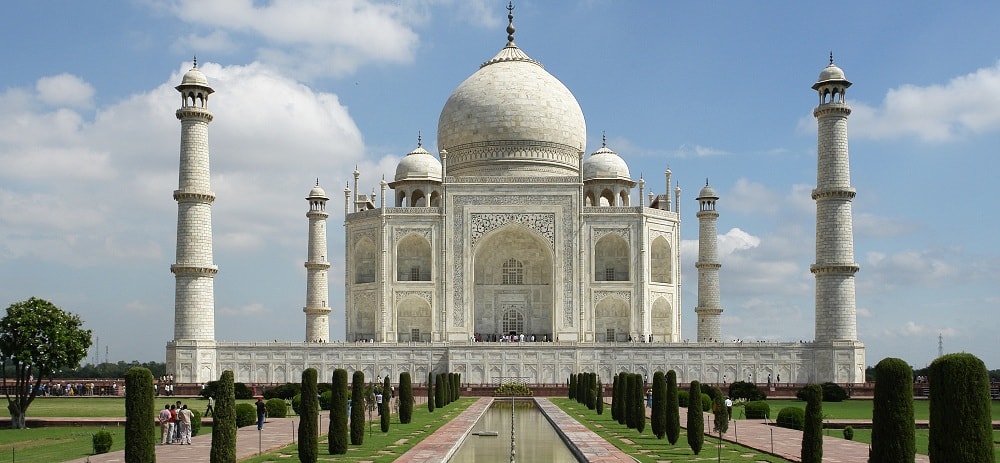
One of the finest examples of Mughal architecture, the Taj Mahal is a striking white marble monument on the banks of the Yamuna river in Agra, Uttar Pradesh. Built by Shah Jahan in memory of his beloved wife Mumtaz Mahal (born Arjumand Banu Begum), construction began approximately in 1631. The mausoleum was completed in 1648; the full complex including gardens and gateways was finished by 1653 — taking 22 years and over 20,000 artisans.
The Taj Mahal is one of the New Seven Wonders of the World (2007) and a UNESCO World Heritage Site since 1983. It receives approximately 8 million visitors annually, making it India’s most visited monument and cultural treasure.
- Location: Agra, Uttar Pradesh
- Timings: Sunrise to Sunset (closed on Fridays)
- Entry Fee: Check ASI’s official ticket portal (asi.payumoney.com) for current prices before visiting.
2. Churches of Old Goa
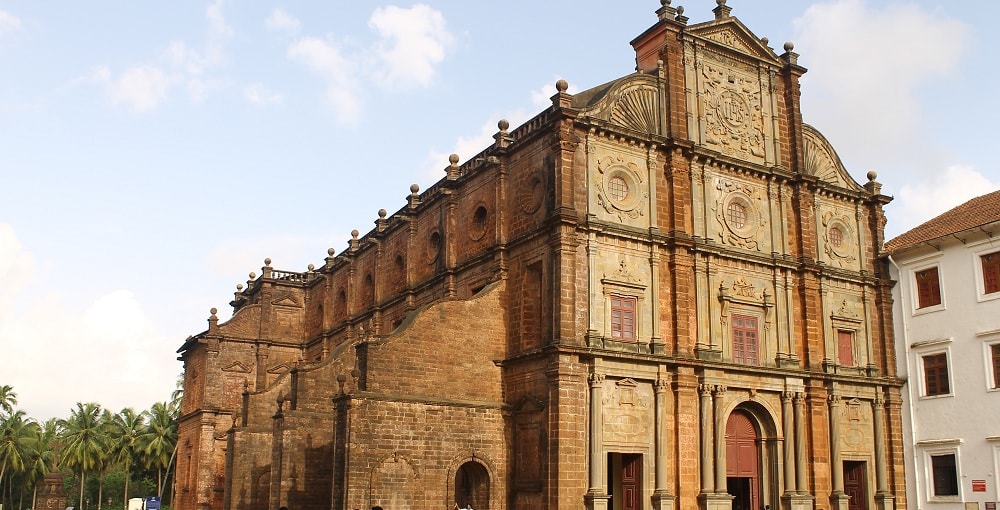
One of India’s finest groups of Portuguese-era churches, the Churches of Old Goa were built during the Portuguese rule (16th–17th century AD) on India’s western coast. The ensemble includes: Bom Jesus Basilica, Lady of Rosary Church, Se’ Cathedral, St. Augustine Church, and St. Francis of Assisi Church and Convent.
This UNESCO World Heritage Site (1986) represents a remarkable collection of Baroque, Mannerist, and Renaissance architecture in tropical India. The Bom Jesus Basilica houses the mortal remains of St. Francis Xavier.
- Location: Old Goa, Goa
- Timings: Generally 9 am to 6 pm (varies by church; open throughout the year)
3. Charminar – Hyderabad
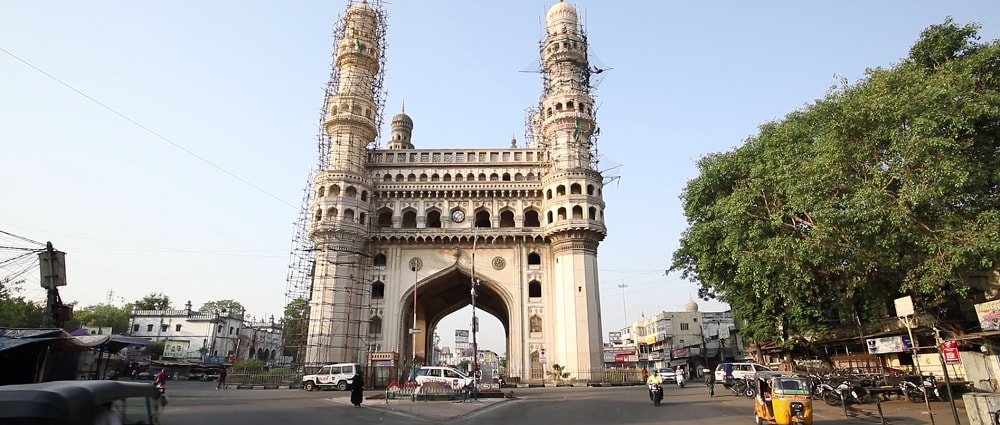
The Charminar, Hyderabad’s most iconic heritage landmark, was built by Sultan Muhammad Quli Qutb Shah in 1591 to commemorate the end of a deadly plague and mark the founding of his new capital city. The name means ‘Four Minarets’ in Urdu.
The monument is a square structure (20 m on each side) rising to an overall height of 56 metres (184 feet). Its four minarets each stand 48.7 metres (160 feet) tall. The top floor houses a mosque with 45 prayer spaces — believed to be the oldest mosque in Hyderabad. Charminar is renowned for its Indo-Islamic architecture, ornate stucco adornments, and stylish balconies.
- Location: Old City, Hyderabad, Telangana
- Timings: Generally 9 am to 5.30 pm; verify current timings before visiting as prayer schedules may affect access
4. Qutub Minar – Delhi
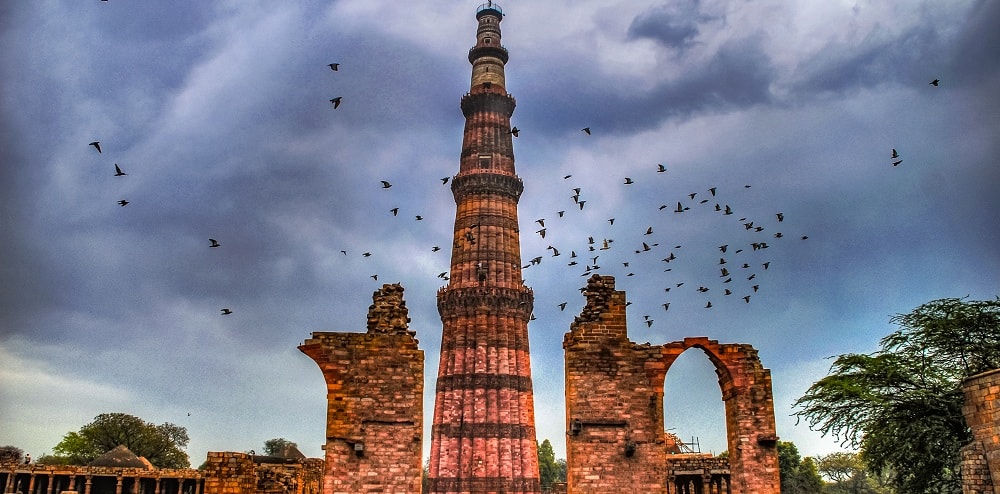
The world’s tallest brick minaret, Qutub Minar is a UNESCO World Heritage Site since 1993. Construction started in 1193 CE by Qutb ud-Din Aibak, founder of the Delhi Sultanate. He completed only the base; Shamsuddin Iltutmish added three more storeys by 1220 CE, and Firoz Shah Tughlaq added the fifth storey in 1368 CE after lightning damage.
The minaret stands 72.5 metres (238 feet) tall, tapering from 14.3 m base diameter to 2.7 m at the top. Its complex also includes the Quwwat-ul-Islam Mosque (India’s oldest extant mosque, 1193 CE) and the famous non-rusting Iron Pillar from the 4th century CE.
- Location: Mehrauli, South Delhi
- Timings: Sunrise to Sunset, all days
- Entry Fee: Refer to ASI’s latest ticket schedule at asi.payumoney.com
5. Sanchi Stupa – Madhya Pradesh
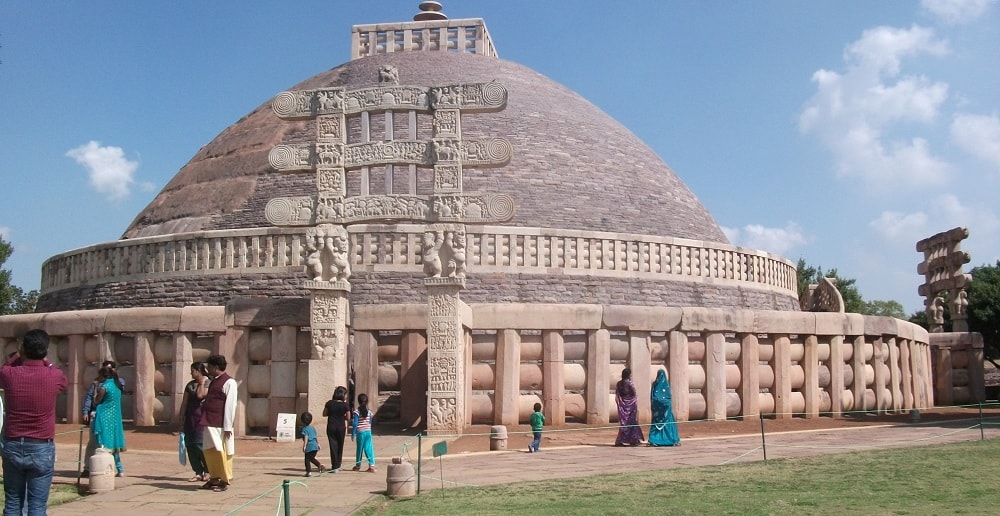
One of India’s oldest stone structures and most important Buddhist heritage sites, the Great Stupa at Sanchi was commissioned by Emperor Ashoka of the Mauryan Empire in the 3rd century BCE to enshrine relics of Lord Buddha. It is the oldest standing stupa in India.
Tourist attractions at Sanchi include Buddhist monuments (stupas, temples, monasteries, pillars) dating between 3rd century BCE and 12th century CE. The Great Stupa’s ornate Toranas (gateways) feature some of the finest Buddhist sculpture in the world. Declared a UNESCO World Heritage Site in 1989.
- Location Sanchi, Raisen district, Madhya Pradesh (~46 km from Bhopal):
- Timings: Sunrise to Sunset, all days
6. Cellular Jail – Port Blair
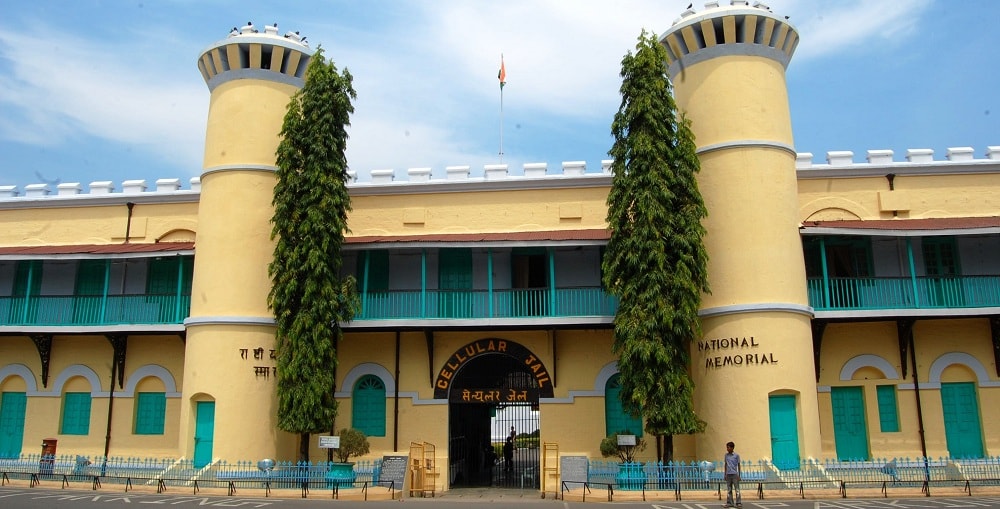
The Cellular Jail, also known as Kala Pani (Black Water), is a former British colonial prison in Port Blair, Andaman and Nicobar Islands. It was used to exile Indian political prisoners to this remote archipelago, far from mainland India.
Constructed between 1896 and 1906, it housed notable freedom fighters including Vinayak Damodar Savarkar (Veer Savarkar) and Batukeshwar Dutt. Declared a National Memorial in 1979, it now hosts a powerful Sound and Light Show each evening — a deeply moving experience for visitors.
- Location: Port Blair, Andaman and Nicobar Islands
- Timings: 9 am to 12 pm, 1 pm to 5 pm (closed on Mondays and national holidays)
7. Hawa Mahal – Jaipur
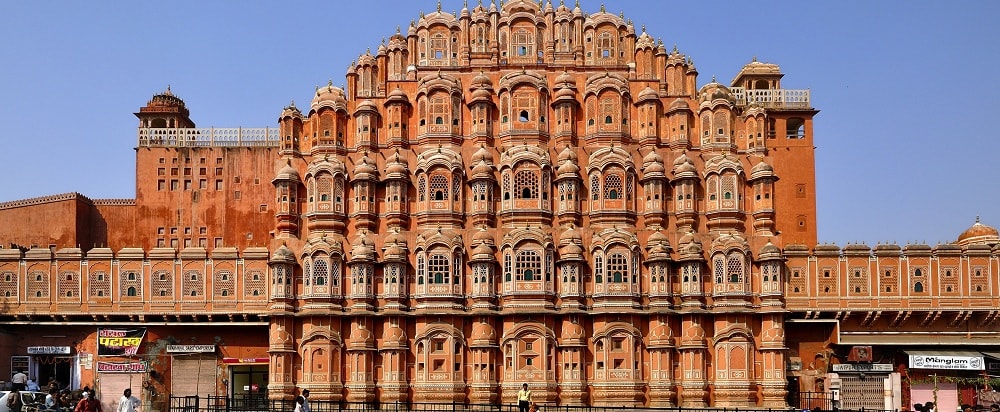
Hawa Mahal — the Palace of Winds — was built by Maharaja Sawai Pratap Singh in 1799 AD in Jaipur, Rajasthan. It is an iconic example of Rajput architecture, constructed so that royal women could observe street festivals through windows without being seen publicly, following the purdah tradition.
The five-storey palace features 953 intricately carved latticed windows (jharokhas) built of red and pink sandstone. Hawa Mahal is renowned for its lightweight honeycomb façade and unique structural design, which has helped it remain stable for over two centuries. It was designed by Lal Chand Ustad in the shape of Lord Krishna’s crown.
- Location: Siredeori Bazaar, Jaipur, Rajasthan
- Timings: 9 am to 4.30 pm (verify current timings before visiting)
- Entry Fee: Check current rates at the Rajasthan Tourism website before visiting
8. Chhatrapati Shivaji Maharaj Terminus – Mumbai
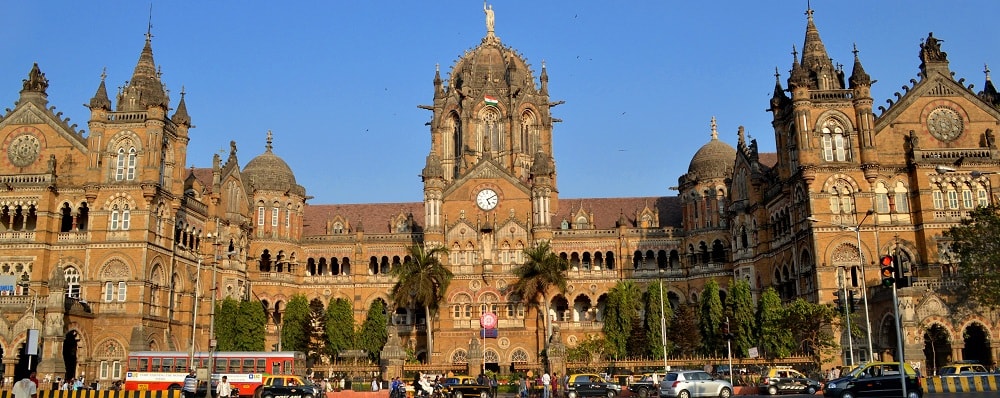
Chhatrapati Shivaji Maharaj Terminus (CSMT), previously Victoria Terminus, is a UNESCO World Heritage Site (2004) in Mumbai. Built between 1878 and 1888 as the headquarters of the Great Indian Peninsular Railway, it remains one of Asia’s busiest and most architecturally remarkable railway stations.
Designed by British architect Frederick William Stevens, CSMT is celebrated for its spectacular blend of Victorian Gothic Revival and traditional Indian architecture — the Indo-Saracenic style. It features turrets, pointed arches, stained glass, gargoyles, and intricate stone carvings.
- Location: D.N. Road, Fort, Mumbai, Maharashtra
- Timings: Open 24 hours (functional railway station)
9. Victoria Memorial Hall – Kolkata
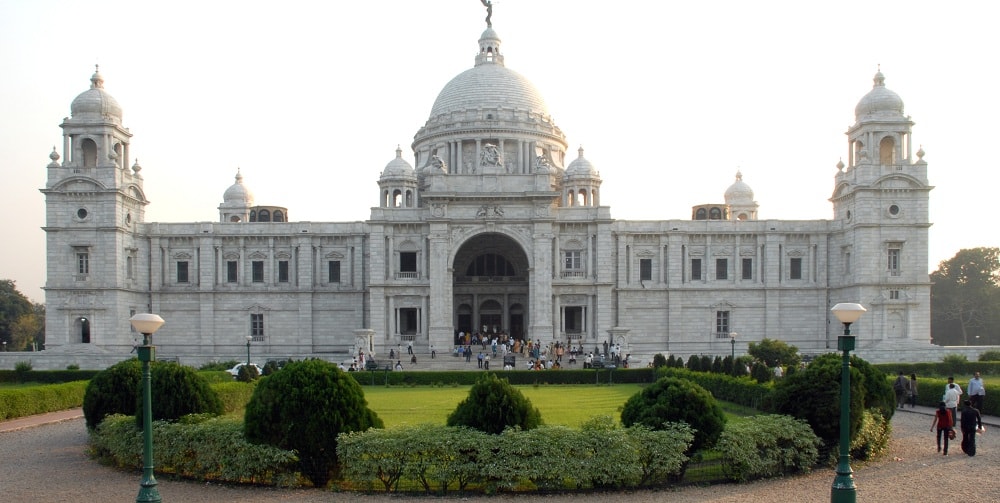
The Victoria Memorial Hall was built in Kolkata, West Bengal, in honor of Queen Victoria, Empress of India. Conceived by Lord Curzon, Viceroy of India, it was designed by British architect Sir William Emerson. Foundation stone laid 4 January 1906; formally opened 28 December 1921.
Built of white Makrana marble, rising to 56 metres (184 feet), its style is predominantly Italian Renaissance blended with Mughal and Indo-Saracenic influences — often called the ‘Taj of the Raj.’ It houses a museum with British classical paintings, sculptures, manuscripts, and Indo-British historical artefacts.
- Location: Maidan, Kolkata, West Bengal
- Timings: 10 am to 5 pm (closed on Mondays)
- Entry Fee: Refer to the Victoria Memorial Hall official website for current ticket prices
10. Gateway of India – Mumbai
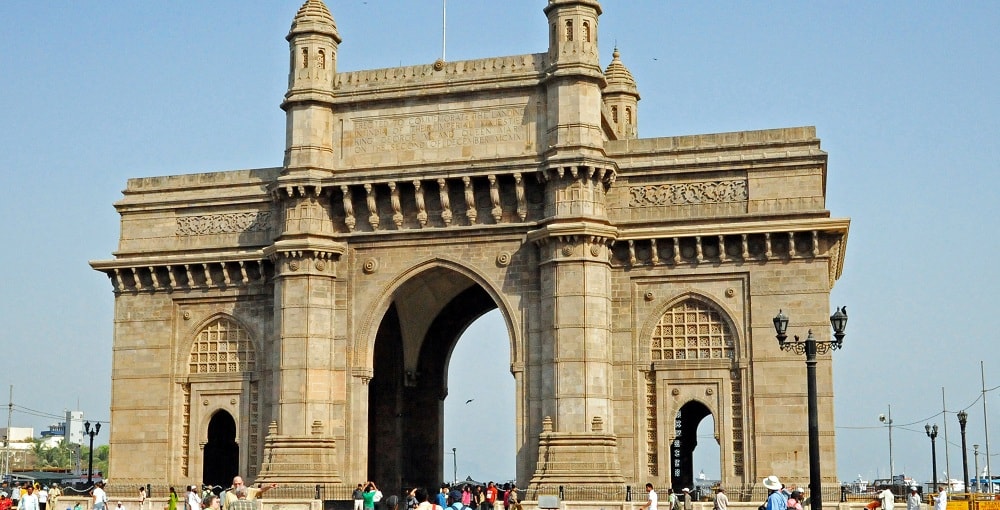
The Gateway of India is a magnificent arch-monument on the waterfront of Mumbai at Apollo Bunder. Foundation stone was laid on 31 March 1913; construction was completed and the monument formally inaugurated on 4 December 1924.
Built to commemorate King George V and Queen Mary’s visit to Bombay in December 1911, it was designed by Scottish architect George Wittet in the Indo-Saracenic style inspired by 16th-century Gujarati architecture. The basalt arch stands 26 metres (85 feet) high. In 1948, the last British troops leaving India passed through this iconic landmark.
- Location: Apollo Bunder, Colaba, Mumbai, Maharashtra
- Timings: Open 24 hours; entry free
Historical Monuments of India by Category
India’s heritage landmarks span thousands of years. Grouping them by dynasty and era helps understand the full scope of Indian architectural history:
Mughal Monuments
| Monument | Location | Period | Best Known For |
| Taj Mahal | Agra, UP | 1631–1653 | Symbol of love; white marble mausoleum |
| Agra Fort | Agra, UP | 1565–1573 | Red sandstone Mughal fortress; UNESCO 1983 |
| Red Fort | Delhi | 1638–1648 | Mughal power seat; UNESCO 2007 |
| Humayun’s Tomb | Delhi | 1570 | First garden tomb in India; UNESCO 1993 |
| Fatehpur Sikri | Agra, UP | 1571–1585 | Abandoned Mughal capital; UNESCO 1986 |
Buddhist & Ancient Heritage
| Monument | Location | Period | Best Known For |
| Sanchi Stupa | MP | 3rd c BCE | Oldest stupa; Emperor Ashoka; UNESCO 1989 |
| Ajanta Caves | Maharashtra | 2nd c BCE–17th c CE | Rock-cut Buddhist paintings; UNESCO 1983 |
| Ellora Caves | Maharashtra | 6th–11th c CE | Buddhist, Hindu, Jain caves; UNESCO 1983 |
| Konark Sun Temple | Odisha | 13th c CE | Chariot-shaped Surya temple; UNESCO 1984 |
| Khajuraho | MP | 950–1050 CE | Chandela temples; sculptures; UNESCO 1986 |
Rajput & Medieval Heritage
| Monument | Location | Period | Best Known For |
| Hawa Mahal | Jaipur, Rajasthan | 1799 | 953 latticed windows; Palace of Winds |
| Charminar | Hyderabad, Telangana | 1591 | 4 minarets; Hyderabad’s iconic symbol |
| Amber Fort | Jaipur, Rajasthan | 16th–17th c | Rajput fort-palace; UNESCO 2013 |
| Mehrangarh Fort | Jodhpur, Rajasthan | 1459 | Towering fort over blue city of Jodhpur |
| Hampi | Karnataka | 14th–16th c | Vijayanagara empire ruins; UNESCO 1986 |
Colonial Heritage
| Monument | Location | Period | Best Known For |
| Gateway of India | Mumbai | 1913–1924 | Arch-monument; King George V visit |
| Victoria Memorial | Kolkata | 1906–1921 | Italian Renaissance; Taj of the Raj |
| CSMT | Mumbai | 1878–1888 | Victorian Gothic; UNESCO 2004 |
| Cellular Jail | Port Blair | 1896–1906 | Kala Pani; freedom fighters’ prison |
| Churches of Old Goa | Goa | 16th–17th c | Portuguese Baroque; UNESCO 1986 |
Major Heritage Cities of India
India’s historical monuments are concentrated in these key heritage cities — each offering multiple iconic structures worth visiting:
| City | State | Key Monuments | Best For |
| Agra | Uttar Pradesh | Taj Mahal, Agra Fort, Fatehpur Sikri | Mughal architecture |
| Delhi | NCT | Qutub Minar, Red Fort, Humayun’s Tomb, India Gate | Historical depth |
| Jaipur | Rajasthan | Hawa Mahal, Amber Fort, Jantar Mantar | Rajput heritage |
| Hyderabad | Telangana | Charminar, Golconda Fort, Qutb Shahi Tombs | Sultanate history |
| Mumbai | Maharashtra | Gateway of India, CSMT, Elephanta Caves | Colonial heritage |
| Kolkata | West Bengal | Victoria Memorial, Howrah Bridge | Indo-British legacy |
| Sanchi/Bhopal | Madhya Pradesh | Sanchi Stupa, Udayagiri Caves | Buddhist pilgrimage |
| Old Goa | Goa | Bom Jesus Basilica, Se’ Cathedral | Portuguese architecture |
Which Historical Monument Should You Visit?
| If You Want… | Visit This Monument | Why |
| Iconic architecture | Taj Mahal, Agra | UNESCO; world’s most recognised building |
| Photography | Hawa Mahal, Jaipur | 953 windows; stunning sunrise shots |
| Buddhist history | Sanchi Stupa, MP | Ashoka-era; oldest stone Buddhist monument |
| Freedom struggle history | Cellular Jail, Port Blair | Moving Sound & Light Show; Kala Pani history |
| Mughal grandeur | Qutub Minar, Delhi | World’s tallest brick minaret; Iron Pillar |
| Colonial architecture | CSMT or Victoria Memorial | UNESCO; Victorian Gothic; Indo-Saracenic |
| Culture & food markets | Charminar, Hyderabad | Famous Laad Bazaar; bangles; biryani culture |
| Spiritual pilgrimage | Churches of Old Goa | St. Francis Xavier relics; Baroque churches |
Other Famous Historical Monuments in India Worth Visiting
Beyond the top 10, India has hundreds of ASI-protected monuments and archaeological sites across every state:
- Red Fort (Lal Qila), Delhi: Mughal fortress and UNESCO World Heritage Site (2007). Site of India’s Independence Day flag hoisting every year.
- Humayun’s Tomb, Delhi: First garden tomb of the Mughal era (1570 CE); UNESCO World Heritage Site since 1993. Inspiration for the Taj Mahal.
- Agra Fort: Massive red sandstone Mughal fortress; UNESCO World Heritage Site since 1983. Houses Jahangiri Mahal and Khas Mahal.
- Konark Sun Temple, Odisha: 13th-century chariot-shaped temple dedicated to the Sun God; UNESCO World Heritage Site since 1984.
- Khajuraho Group of Monuments, MP: 10th–11th century Chandela dynasty temples; UNESCO since 1986. Famous for exquisite sculptural detail.
- Hampi, Karnataka: Ruins of the Vijayanagara Empire (14th–16th century); UNESCO World Heritage Site since 1986.
- Fatehpur Sikri, UP: Abandoned Mughal capital near Agra; UNESCO since 1986. Built by Akbar in 1571.
- India Gate, Delhi: War memorial built in 1931 to honour Indian soldiers; designed by Sir Edwin Lutyens.
- Mysore Palace, Karnataka: Indo-Saracenic palace of the Wadiyar dynasty; one of India’s most visited monuments.
- Jantar Mantar, Jaipur: 18th-century astronomical observatory by Sawai Jai Singh II; UNESCO since 2010.
Practical Travel Tips for Historical Monuments of India
- Best time to visit: October to March — cooler and pleasant weather across India for most monuments.
- Book tickets in advance: For Taj Mahal and major ASI-protected sites, book online at asi.payumoney.com to avoid queues.
- Entry fees: Fees are revised periodically by ASI and state tourism boards. Always check the official ticket portal or the monument’s website before visiting.
- Dress appropriately: Carry a scarf/shawl for mosques, temples, and stupa areas. Remove shoes before entering religious sections.
- Guided tours: Hire ASI-approved or government-certified guides at major monuments for authentic historical context.
- Photography: Check camera/video fees at each site. Some inner sanctums prohibit photography.
- Golden Triangle: Combine Agra (Taj Mahal), Delhi (Qutub Minar, Red Fort), and Jaipur (Hawa Mahal) for a classic 5–7 day heritage circuit.
- Indian visa: Tourists from 160+ countries are eligible for India e-Visa, your key to all these breathtaking monuments.
Conclusion
India’s historical monuments span millennia — from Emperor Ashoka’s Sanchi Stupa (3rd century BCE) to the Mughal grandeur of the Taj Mahal, the Rajput ingenuity of Hawa Mahal, the Indo-Islamic splendour of Charminar, and the colonial legacy of the Gateway of India and Victoria Memorial. With 42 UNESCO World Heritage Sites, India offers some of the finest archaeological monuments and cultural treasures on earth.
Whether you are exploring ancient monuments, planning a Golden Triangle tour, or building a complete India heritage itinerary, these iconic structures tell the story of one of the world’s greatest civilisations. Connect with a heritage travel expert and experience these architectural marvels of India firsthand.
Frequently Asked Questions
Q1. What are the most famous historical monuments of India?
The most famous historical monuments of India include the Taj Mahal (Agra), Qutub Minar (Delhi), Charminar (Hyderabad), Red Fort (Delhi), Sanchi Stupa (MP), Hawa Mahal (Jaipur), Cellular Jail (Andaman Islands), and the Gateway of India (Mumbai). Many are UNESCO World Heritage Sites.
Q2. Which historical monuments of India are UNESCO World Heritage Sites?
UNESCO-listed historical monuments in India include: Taj Mahal (1983), Qutub Minar (1993), Churches of Old Goa (1986), Sanchi Stupa (1989), CSMT Mumbai (2004), Red Fort (2007), Humayun’s Tomb (1993), Agra Fort (1983), Fatehpur Sikri (1986), and Ajanta & Ellora Caves. India has 42 UNESCO World Heritage Sites as of 2026.
Q3. When was the Taj Mahal built and who built it?
Shah Jahan built the Taj Mahal in memory of his wife Mumtaz Mahal. Construction began around 1631 after her death; the mausoleum was completed in 1648 and the full complex by 1653. It took 22 years and over 20,000 artisans. It is a UNESCO World Heritage Site and one of the New Seven Wonders of the World (2007).
Q4. What is the oldest historical monument in India?
The Great Stupa at Sanchi (Madhya Pradesh), commissioned by Emperor Ashoka in the 3rd century BCE, is one of India’s oldest standing stone monuments. The Ajanta Caves also date to the 2nd century BCE. The Iron Pillar in the Qutub Minar complex dates to the 4th century CE and has not rusted in 1,600+ years.
Q5. Which historical places in India are best to visit for students?
For students, the most educational historical places in India include: Qutub Minar (Delhi Sultanate history), Sanchi Stupa (Buddhist and Mauryan history), Red Fort (Mughal and British history), Cellular Jail (freedom struggle), and Fatehpur Sikri (Akbar’s court and culture). All have on-site museums and guided tours.
Q6. Which monuments of India are free to visit?
The Gateway of India (Mumbai) and the exterior of Charminar (Hyderabad) are free to visit. India Gate (Delhi) is also free. For entry into most ASI-protected monuments like Taj Mahal, Qutub Minar, and Red Fort, a nominal entry fee applies — check current rates at asi.payumoney.com.
Q7. Which historical monuments in India are open on Fridays?
Most monuments are open on Fridays, but the Taj Mahal is closed on Fridays for the weekly prayer (Juma). Charminar’s visitor access may be affected during Friday prayers. Always verify timings at the official website before planning your Friday visit.
Q8. What is the significance of Cellular Jail in India’s history?
Cellular Jail (Kala Pani) in Port Blair, Andaman and Nicobar Islands, was used by the British to exile Indian independence activists. It housed freedom fighters like Vinayak Damodar Savarkar. Declared a National Memorial in 1979, it is a powerful symbol of India’s independence struggle with a moving Sound and Light Show each evening.
Q9. What are the best historical monuments to visit in North India?
The best historical monuments in North India include: Taj Mahal and Agra Fort (Agra), Qutub Minar, Red Fort, and Humayun’s Tomb (Delhi), Hawa Mahal and Amber Fort (Jaipur), and Fatehpur Sikri (near Agra). The Golden Triangle tour — Delhi, Agra, Jaipur — covers all major highlights in 5–7 days.
Q10. Which is India’s most visited historical monument?
The Taj Mahal in Agra is India’s most visited monument, attracting approximately 8 million visitors annually. Other highly visited monuments include Qutub Minar (Delhi), Red Fort (Delhi), Hawa Mahal (Jaipur), and the Gateway of India (Mumbai).
Q11. Which historical monuments are best for family visits in India?
Family-friendly historical monuments in India include the Taj Mahal (Agra), Hawa Mahal (Jaipur), Gateway of India (Mumbai), Victoria Memorial (Kolkata with gardens), and Sanchi Stupa (MP). These offer open spaces, guided tours, and manageable walking distances suitable for children and senior citizens.
Q12. How many ASI-protected monuments are there in India?
The Archaeological Survey of India (ASI) protects over 3,600 monuments of national importance across India. These include world-famous sites like the Taj Mahal and Qutub Minar as well as thousands of lesser-known forts, temples, and archaeological sites spread across all 28 states and 8 union territories.
Q13. What is Hawa Mahal and why was it built?
Hawa Mahal (Palace of Winds) in Jaipur was built in 1799 by Maharaja Sawai Pratap Singh. It was designed so royal women could observe street festivals through its 953 latticed windows (jharokhas) without being seen, in keeping with the Rajput purdah tradition. Its unique honeycomb facade of red and pink sandstone makes it one of India’s most photographed architectural marvels.
Q14. What is the Golden Triangle tour of India?
The Golden Triangle is India’s most popular heritage circuit connecting Delhi, Agra, and Jaipur. In 5–7 days, travellers can visit key historical monuments including Taj Mahal, Agra Fort, Qutub Minar, Red Fort, Humayun’s Tomb, Hawa Mahal, Amber Fort, and Jantar Mantar. It is the ideal introduction to India’s Mughal and Rajput architectural legacy.
Q15. Which monument of India was built by Emperor Ashoka?
The Great Stupa at Sanchi, Madhya Pradesh, was commissioned by Emperor Ashoka of the Mauryan Empire in the 3rd century BCE. It is one of India’s oldest stone structures and a UNESCO World Heritage Site since 1989. Ashoka also built numerous pillars (Ashokan Pillars) across India inscribed with Buddhist edicts.
Q16. What is the architectural style of the Gateway of India?
The Gateway of India is built in the Indo-Saracenic style, inspired by 16th-century Gujarati architecture. Designed by Scottish architect George Wittet, it is an arch of yellow Kharodi basalt standing 26 metres (85 feet) tall. Foundation stone was laid in 1913 and construction was completed and inaugurated on 4 December 1924.
Q17. Which historical monuments in India are made of white marble?
Several iconic monuments of India are made of white marble: the Taj Mahal (white Makrana marble, Agra), Victoria Memorial (white Makrana marble, Kolkata), and Dilwara Temples (white marble, Mount Abu, Rajasthan). The upper storeys of Qutub Minar also use marble. Makrana marble from Rajasthan is the most prized material in Indian monumental architecture.
Q18. What is the best 7-day heritage itinerary for India?
Day 1–2: Delhi — Qutub Minar, Red Fort, Humayun’s Tomb, India Gate. Day 3: Agra — Taj Mahal, Agra Fort. Day 4: Fatehpur Sikri. Day 5: Jaipur — Hawa Mahal, Amber Fort, Jantar Mantar. Day 6: Travel to Hyderabad — Charminar, Golconda Fort. Day 7: Mumbai — Gateway of India, CSMT. Add extra days for Goa, Kolkata, Bhopal (Sanchi), or Odisha (Konark).

 Call
Call Enquiry